
The solemn gathering, held within the premises of the Lamurde Local Government Secretariat, functioned as both a farewell ceremony and a moment of community outrage.
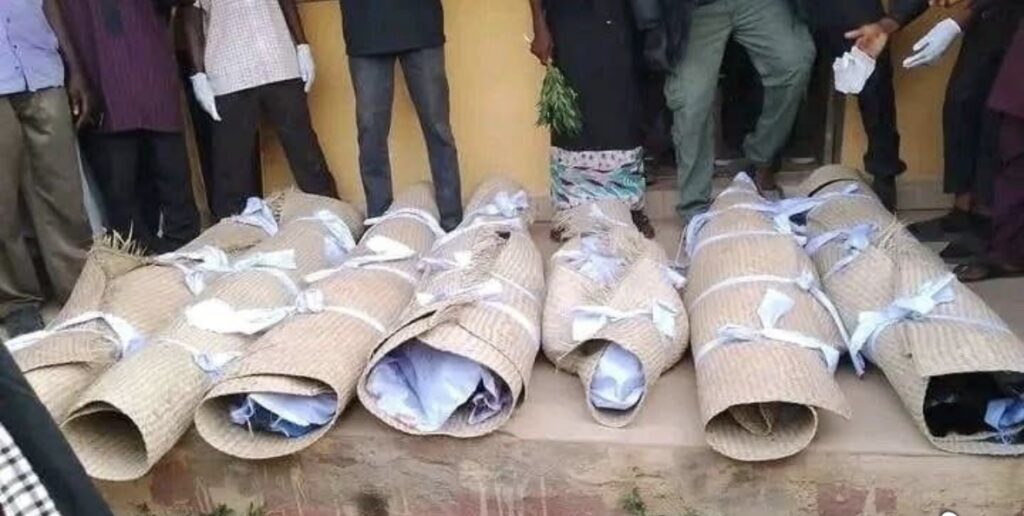
In an atmosphere heavy with grief, anger and unanswered questions, nine women who died in Monday’s alleged army personnel shooting in Adamawa State were on Tuesday buried in a mass grave that attracted thousands from Lamurde and nearby communities.
The solemn gathering, held within the premises of the Lamurde Local Government Secretariat, functioned as both a farewell ceremony and a moment of community outrage.
Community leaders used the event to reveal the identities of the deceased — women whose deaths have now intensified calls for justice.
The victims are; Florence Frank, Suzy Tanko, Marry Talmon, Mercy Kennedy, Lucky Yakubu, Pwamwasari Tami, Mary Shikauno, Destiny Gibson, and Hunbokwama Nickson.
Clothed in white/grass-mat and laid next to one another, the victims’ remains created a painful scene that increased the community’s frustration
over what many are calling “an avoidable and unjustified military assault.”
“The Army opened fire on innocent women” — Bachama youth wing alleges.
At the burial, the Bwate Youth Wing, representing several dialect groups within the Bachama-speaking communities, delivered a strong accusation against the Nigerian Army.
Its Secretary-General, Abner Kwakano, insisted the military was fully responsible.
“We maintain without hesitation that the army opened fire on innocent women, resulting in deaths and injuries. This is the truth as witnessed directly by the community.”
Kwakano called for a transparent, independent investigation and stressed that anything less than accountability would dishonour the memories of the victims.
Chobo youth forum counters blame, insists “we were the victims”.
The Chobo Youth Forum rejected reports claiming its tribal militia sparked the confrontation.
In a statement signed by Engr. Gideon Sam, its Secretary-General, the forum alleged the opposite — saying Chobo communities were attacked and their villages burned by a Bachama militia.
The group described attempts to attribute the first act of aggression to Chobo youths as “false, misleading and dangerous.”
A community in mourning, a nation seeking answers, and as both sides exchange accusations and tension continues to rise, pressure is increasing on the Nigerian Army to explain what truly triggered the deadly clash and why unarmed women became the victims.